
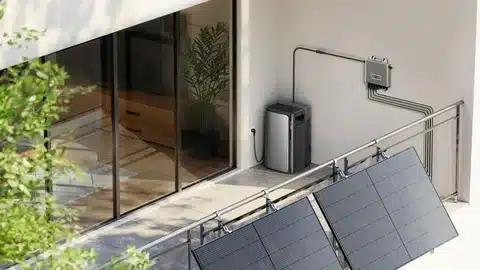
Homeowners and businesses looking to improve solar system efficiency often turn to Unicorn Solar for guidance on solar panels and microinverters. These technologies help convert solar energy more effectively while supporting residential solar inverters and providing reliable power output. Understanding how microinverters work and selecting compatible panels is key to optimizing energy conversion and maximizing the performance of your solar installation.
What Are Micro Inverters?
Microinverters are small devices attached to each solar panel, converting DC electricity into AC power at the panel level rather than at a central inverter. This design provides several advantages:
- Improved energy harvest: Each panel operates independently, so shading or malfunctions on one panel don’t affect the rest.
- Individual panel monitoring: Track real-time performance to detect inefficiencies.
- Enhanced system efficiency: Reduces energy loss in wiring and improves overall inverter performance.
Micro Inverters vs. Traditional String Inverters
| Feature | Micro Inverter | String Inverter |
| Conversion Location | Each panel | Central inverter |
| Shading Impact | Minimal | Reduces the output of all panels |
| Monitoring | Individual panel | Aggregate system |
| Maintenance | Easy to replace individually | Central system affected |
Benefits of Using Solar Panels with Micro Inverters
Combining solar panels and microinverters offers several benefits for residential and commercial systems:
- Optimized energy conversion: Each panel operates at maximum efficiency.
- Improved reliability: One panel’s performance doesn’t affect the entire system.
- Safer operation: AC conversion at the panel reduces high-voltage DC in wiring.
- Scalable system design: Easily expandable by adding more panels with micro inverters.
Installation Considerations
To ensure optimal performance, consider:
- Compatibility: Microinverters must match solar panel specifications.
- Panel placement: Minimize shading and ensure maximum sunlight exposure.
- Monitoring system: Use software to track each panel’s output.
- Professional installation: Certified technicians ensure safe and efficient setup.
Maximizing Energy Conversion Efficiency
Pairing solar panels and microinverters with residential solar inverters can further improve efficiency. Strategies include:
- Orienting panels to capture maximum sunlight throughout the day.
- Mitigating shading effects with independent panel operation.
- Regularly reviewing system performance and maintaining underperforming panels.
These strategies allow homeowners and businesses to maximize the energy generated and ensure a consistent electricity supply.
Advantages for Residential Systems
Microinverters are especially effective for home solar setups:
- Ideal for roofs with multiple angles or partial shading.
- Individual panel monitoring allows homeowners to quickly identify and fix issues.
- Easier upgrades and maintenance compared to string inverter systems.
By combining solar panels and microinverters, residential users can increase energy output, reduce energy loss, and enjoy long-term cost savings.
Future-Proofing Your Solar System
Investing in microinverters today prepares your system for future energy demands:
- Easily integrate with battery storage solutions to store excess energy.
- Expand the system with additional panels as household energy needs grow.
- Maintain efficiency as solar technology continues to advance.
Integrating microinverters with modern panels also complements energy storage strategies, ensuring your home solar system delivers reliable, long-term performance.
