
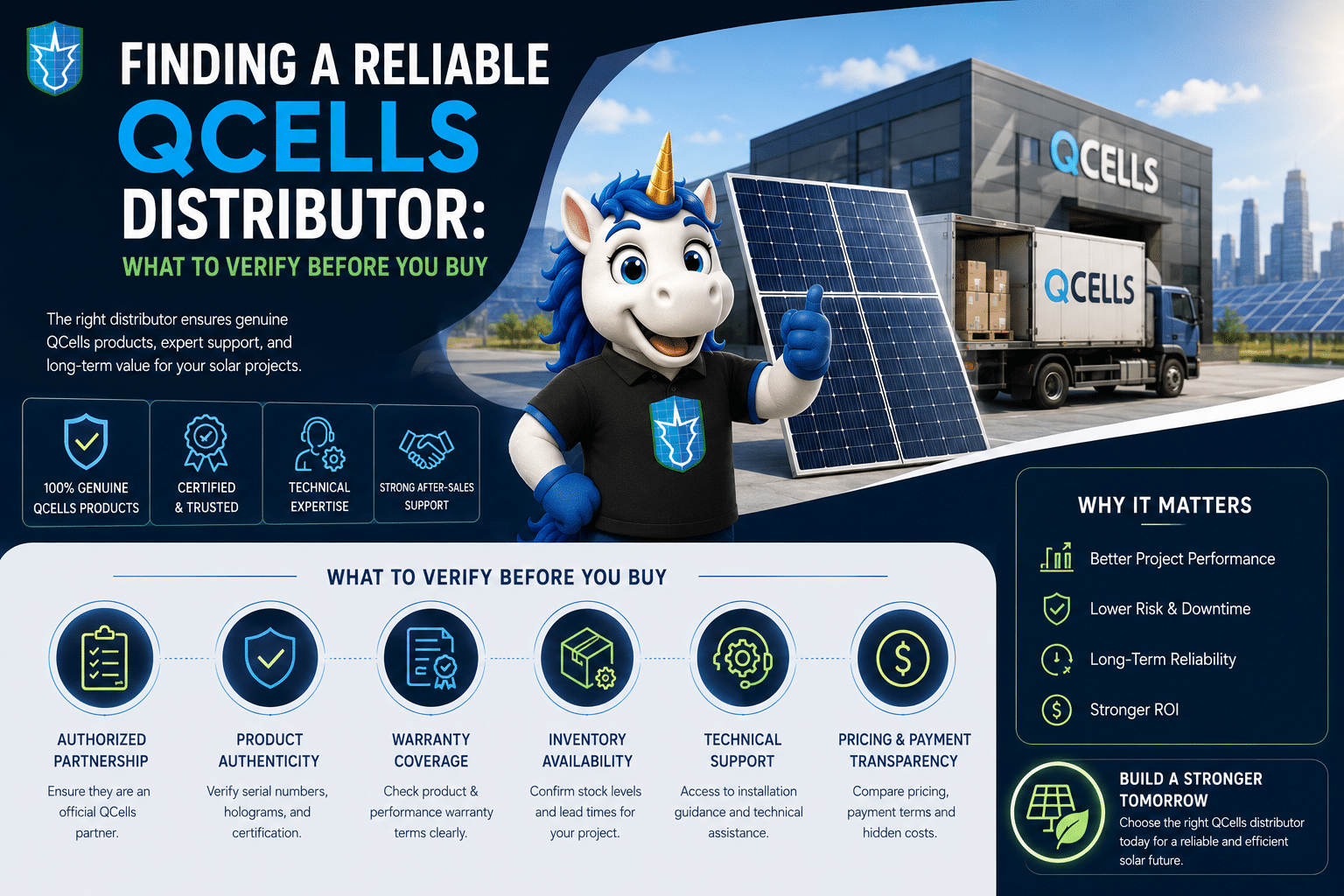
Finding a Reliable QCells Distributor: What to Verify Before You Buy
Meta Description: Looking for a QCells distributor? Here’s how to verify you’re getting genuine panels with proper documentation, and why sourcing flexibility matters even for a specific brand.
QCells is one of those brands that shows up on a lot of project specs by name. It’s a recognized brand with a strong reputation, which also means it’s exactly the kind of product that attracts gray market resellers and unverifiable supply chains once demand outpaces easy availability.
If you’re searching for a QCells distributor, you’re probably not just looking for anyone who says they can get you the panels. You want to know the panels are genuine, properly documented, and traceable back to an authorized production source, especially if you’re specifying QCells because a client or project requirement called for that specific brand.
This is worth taking seriously before you commit to an order, not after a shipment arrives with paperwork that doesn’t quite add up.
Why Popular Brands Attract Sourcing Risk
Demand for well-known brands like QCells creates an incentive for less scrupulous resellers to blur the lines between genuine product and something else, whether that’s mislabeled panels, product from unauthorized production runs, or simply modules that don’t come with the documentation you’d need to back a warranty claim later.
None of this means most QCells distributors are unreliable. It means the popularity of the brand is exactly why verification matters more here than it might for a less in-demand product line.
What to Verify Before Committing to an Order
Documentation That Traces Back to the Manufacturer
Ask for documentation that ties the specific batch you’re buying back to an authorized production run. If a distributor can’t provide this, or gets vague when asked, that’s worth taking seriously.
Warranty Registration That Actually Works
Genuine QCells modules come with manufacturer warranty coverage, but that coverage depends on the product being properly registered and traceable. If a distributor can’t confirm how warranty registration works for the specific batch you’re buying, you may be taking on more risk than the brand name suggests.
Consistent Serial Numbers and Labeling
Panels from a legitimate supply chain should have consistent, verifiable serial numbers and labeling that match manufacturer records. Inconsistencies here are one of the more common signs of a supply chain issue.
A Distributor Who’s Transparent About Where Stock Comes From
A distributor confident in their supply chain will usually be straightforward about where their QCells inventory originates. Vague answers about sourcing, or reluctance to discuss it, are worth noting.
Why Sourcing Flexibility Still Matters, Even for a Specific Brand
Specifying a brand by name makes sense when a project calls for it. But brand-specific demand also means availability can tighten quickly, and a distributor locked into a single supply channel for that brand may not have a good answer when stock runs short during your project window.
Working with a broker who carries QCells alongside other Tier 1 manufacturers gives you a practical advantage: if QCells availability tightens or lead times stretch beyond your timeline, there’s a qualified alternative already in the conversation instead of a scramble to find one.
Signs Worth Watching For
- Pricing significantly below other quotes for the same QCells model, with no clear explanation
- Reluctance or vague answers when asked for documentation tracing the batch to an authorized source
- No clear process for warranty registration on the specific units you’re buying
- Serial numbers or labeling that seem inconsistent across the same order
- A distributor who only carries this one brand, with no alternative if availability becomes an issue
Real-World Examples
The documentation gap. A buyer purchased what was represented as QCells modules from a reseller offering a notably lower price. When a warranty issue came up later, the manufacturer had no record of that batch being part of an authorized distribution channel, leaving the buyer without recourse.
The availability saves. A commercial project specified QCells modules, but lead times stretched beyond the project’s install window once the order was placed. Because the supplier also carried other Tier 1 brands with comparable specs, the buyer was able to shift a portion of the order to an available alternative without stalling the project.
The inconsistent batch. An installer received a shipment where serial numbers on a portion of the panels didn’t match the documentation provided at the time of purchase. The discrepancy delayed the project while it was investigated and ultimately required the distributor to replace that portion of the order.
FAQ
How can I tell if a QCells distributor is legitimate?
Ask for documentation tracing the specific batch back to an authorized production source, and confirm how warranty registration works before you buy. A legitimate distributor should be able to answer both clearly.
Is a lower price always a red flag for QCells panels?
Not always, but a price noticeably below other quotes for the same model deserves a closer look at documentation and sourcing before you assume it’s just a good deal.
What happens if I buy modules that turn out not to be properly authorized?
You risk having no valid manufacturer warranty coverage, which can be a significant problem if the panels underperform or fail down the line.
Should I only buy QCells if my project specifically requires it?
If a project or client requirement calls for QCells specifically, that makes sense. Otherwise, it’s worth discussing comparable Tier 1 alternatives with your supplier, since brand-specific sourcing can limit flexibility if availability tightens.
Can a broker get QCells panels if a dedicated distributor is out of stock?
Often yes, if they maintain relationships across multiple manufacturers and distribution channels rather than relying on a single source for that brand.
Wrapping Up
QCells is a strong brand for a reason, and that’s exactly why verifying your source matters. A legitimate distributor should be able to answer questions about documentation, warranty registration, and traceability without hesitation. My take: the goal isn’t just finding someone who has QCells panels available. It’s finding someone who can prove where those panels actually came from, and who has a plan if that specific brand isn’t available when you need it. If you’re sourcing QCells modules or comparable Tier 1 alternatives for an upcoming project, reach out to Unicorn Solar for a free consultation on availability and documentation before you commit to an order.
