
Choosing the right solar technology for your project can significantly impact performance, budget, and long-term results. Two of the most common types of solar modules are thin-film and crystalline silicon. While both convert sunlight into electricity, their construction, efficiency, and applications differ in essential ways.
In this guide, we’ll break down the key differences between thin-film vs crystalline solar modules, so you can make an informed choice that matches your goals—whether you’re a developer, EPC, or business owner.
Understanding the Two Main Types of Solar Panels
Before comparing the two, let’s take a brief look at how each technology is created and how it operates.
Crystalline Silicon Solar Modules
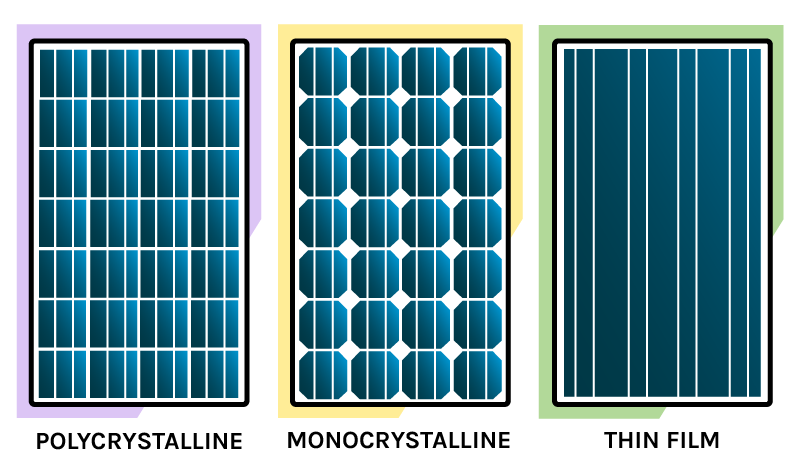
Crystalline modules are the most widely used types of solar panels today. They are made from silicon wafers and come in five types of structures.
TopCon or Tunnel Oxide Passivated Contact solar cells represent a new generation of solar technology designed to enhance efficiency and performance.
HJT solar cells, or Heterojunction solar cells, combine crystalline silicon (c-Si) with amorphous silicon (a-Si) to enhance efficiency. They achieve solar efficiencies of up to 26.7% due to improved recombination processes and excellent passivation of the intrinsic amorphous silicon layer.
PERC solar cells, or Passivated Emitter and Rear Cell solar cells, are an advanced type of photovoltaic technology that enhances the efficiency of traditional silicon solar cells by adding a passivation layer on the rear side.
- Monocrystalline: Made from a single crystal of silicon. These offer high efficiency and a sleek black appearance.
- Polycrystalline: Made from multiple silicon crystals melted together—slightly lower efficiency, with a blue hue.
These are considered rigid solar panels, known for their durability and high power output.
Thin-Film Solar Modules
Thin-film panels utilize layers of light-absorbing materials deposited onto a substrate, such as glass, metal, or plastic. Common materials include:
- Cadmium Telluride (CdTe)
- Amorphous Silicon (a-Si)
- Copper Indium Gallium Selenide (CIGS)
These are lightweight, flexible, and have a uniform appearance, making them ideal for specific niche applications.
Thin-Film vs Crystalline Solar Modules: Key Differences
Now let’s dig into the fundamental differences across performance, cost, use cases, and more.
1. Efficiency and Energy Output
Photovoltaic efficiency is often the first metric developers consider.
- Crystalline modules offer higher efficiency, typically ranging from 15% to 26% (depending on the type of crystalline module). This makes them ideal for space-constrained areas, such as rooftops.
- Thin-film panels have an efficiency of around 10% to 18%, although newer technologies are improving this figure.
If maximizing energy per square foot is a priority, crystalline wins in most cases.
2. Size and Weight
- Crystalline panels are heavier and bulkier due to their glass and aluminum framing.
- Thin-film panels are significantly lighter, making them easier to install on structures with weight limits or non-traditional surfaces.
This makes thin-film a strong candidate for large rooftops or lightweight structures.
3. Aesthetics and Flexibility
- Thin-film panels offer a uniform, matte-black finish and can be curved or mounted on flexible surfaces, which is why they’re often referred to as flexible solar panels.
- Crystalline panels are rigid, framed, and more visible—though they’re increasingly designed with sleek aesthetics in mind.
For architects or clients concerned about design integration, thin-film may provide an edge.
4. Temperature Tolerance
- Thin-film modules typically perform better in high-heat environments. Their efficiency degrades less with rising temperatures.
- Crystalline panels tend to lose efficiency slightly faster in hot climates, which can impact output in specific installations.
For solar farms or systems in desert regions, thin-film may hold an advantage.
5. Installation Use Cases
- Crystalline solar modules dominate rooftop solar systems, residential projects, and most commercial solar installations, particularly those with limited space.
- Thin-film technology is commonly used on larger industrial rooftops, building-integrated photovoltaics (BIPV), or niche applications such as RVs and greenhouses.
Your use case will strongly influence which panel type is the better fit.
Pros and Cons: Side-by-Side Comparison
| Feature | Crystalline Silicon | Thin-Film Modules |
| Efficiency | High (15%–26%) | Lower (10%–18%) |
| Weight | Heavier | Lightweight |
| Flexibility | Rigid | Flexible options available |
| Aesthetic Appeal | Visible cells and frames | Uniform matte black look |
| Temperature Tolerance | Moderate | Excellent |
| Space Efficiency | High output in small areas | Requires more surface area |
| Cost | Moderate to high | Lower material costs |
| Common Applications | Residential, commercial rooftop | Industrial, curved surfaces |
Cost Comparison
Solar module cost comparison is another key factor when choosing between the two.
- Crystalline panels have a higher upfront cost but provide more power per panel, lowering balance-of-system costs.
- Thin-film panels are cheaper per watt in terms of material and manufacturing, but you may need a larger area and additional mounting hardware to achieve the same output.
Overall system costs often depend on the project’s scale, available space, and structural limitations.
Which Type Is Better for Your Project?
There’s no one-size-fits-all answer. Here are guidelines based on different priorities:
Choose Crystalline If:
- You’re installing on a small roof or in a limited space
- You want high efficiency and quicker ROI
- You need well-established, widely supported technology.
- Your climate has moderate temperatures.
Choose Thin-Film If:
- Your structure can’t support heavy panels
- You’re installing on curved or non-traditional surfaces.
- You’re building an off-grid or mobile system.
- Your project is in a very hot climate or a utility-scale application with ample space.
What About Durability and Lifespan?
- Crystalline panels typically have a guaranteed lifespan of 25–30 years, accompanied by corresponding warranties.
- Thin-film modules typically last 20 years, though improvements in material science are extending their durability.
As a long-term investment, crystalline systems offer more proven reliability. However, some commercial-grade thin-film systems are closing this gap.
Environmental Impact and Manufacturing
Thin-film panels use less energy to manufacture and produce fewer emissions in production. However, some types (like CdTe) involve materials that require specialized recycling. Crystalline modules, on the other hand, have well-established recycling paths due to their silicon base.
For sustainability-minded projects, both can be viable depending on how the full lifecycle is managed.
Final Thoughts
Both thin-film and crystalline solar modules have their place in today’s renewable energy market. The choice depends on your project’s goals, site conditions, and budget. Crystalline panels remain the go-to solution for most rooftop and space-limited installations, while thin-film technology offers lightweight, flexible advantages in large-scale or niche applications.
If you’re unsure which is right for your commercial or industrial project, consulting with solar equipment specialists can help you evaluate real-world performance and long-term value.
At Unicorn Solar Inc, we guide developers and EPCs in selecting the best-fit technology for their specific project needs. Our procurement expertise and product sourcing services ensure you receive high-quality, bankable components tailored to your particular goals—whether for crystalline or thin-film applications.