
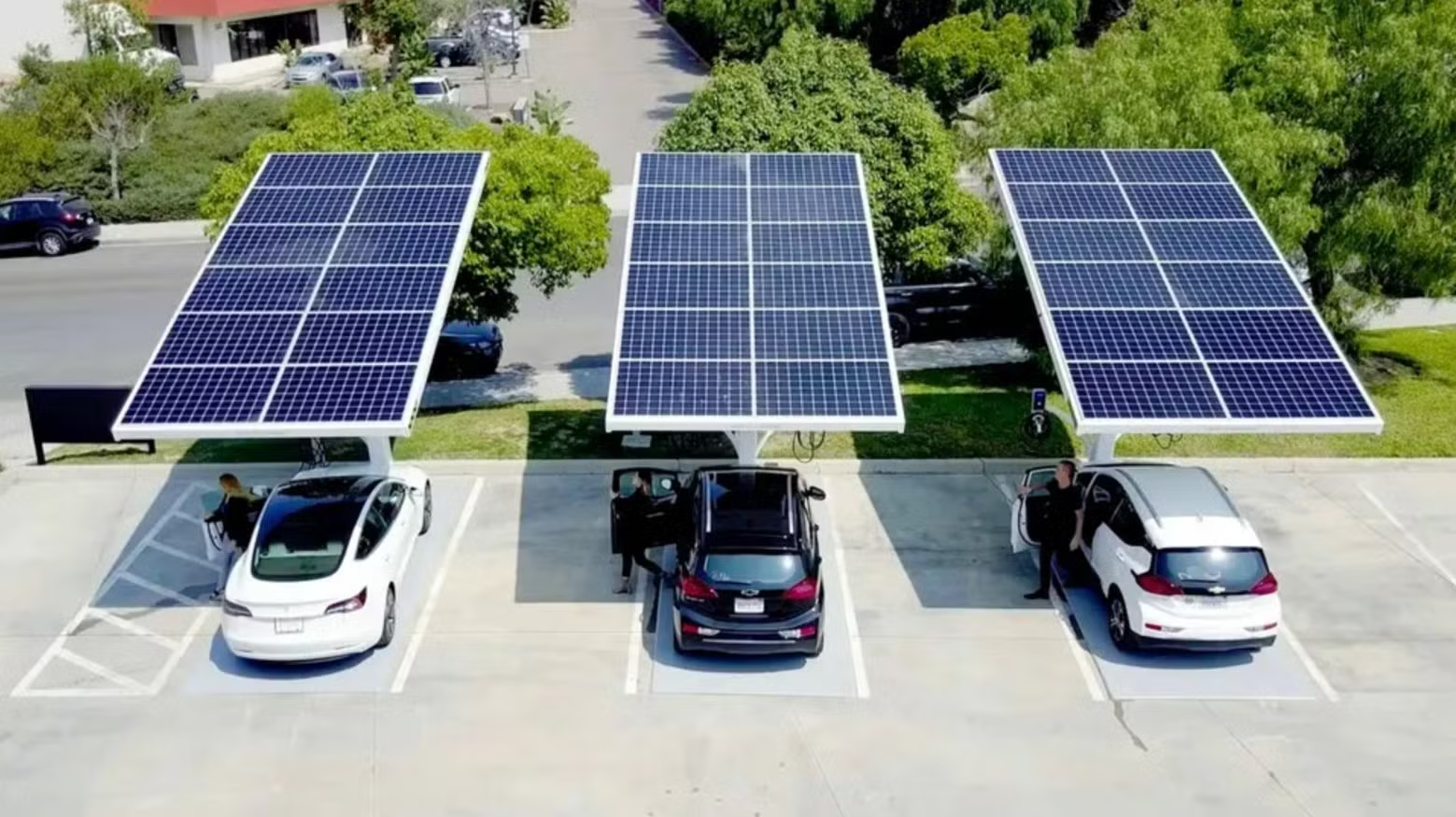
Transitioning to an electric vehicle (EV) is a decisive step toward cleaner transportation, but pairing your EV with solar panels takes sustainability and savings to the next level. By installing solar panels to charge electric car batteries, you reduce your reliance on grid electricity, cut fuel costs, and lower your carbon footprint. In this 800‑word guide, we’ll explore how the system works, key benefits, components you need, installation considerations, cost factors, and future trends.
1. Why Use Solar Panels to Charge Your EV?
- Lower Operating Costs
Charging with sunlight is free after the upfront investment. At an average residential electricity rate of $0.15 per kWh, a 300‑mile monthly driving habit (≈10 kWh per 30 miles) costs about $15. Generate that with solar, and you eliminate the bill. - Energy Independence
A home solar array lets you fuel your EV even during peak grid demand or outages (when paired with battery storage), ensuring you’re never stranded. - Environmental Impact
Generating clean, renewable energy for driving can reduce CO₂ emissions by over 4 tons per year compared to a gasoline-powered car.
2. How Does the System Work?
- Solar Generation
Sunlight hits photovoltaic (PV) panels, converting photons into DC electricity. - Inverter Conversion
A solar inverter converts DC to AC power for home use or grid export. - EV Charger Integration
An EV charging station draws AC power directly from your solar inverter output or the grid, depending on solar availability. - Smart Energy Management
Advanced systems prioritize solar power for the EV charger first, then route any surplus to the home or battery storage, and only draw from the grid when necessary.
3. Key Components
- PV Panels
Monocrystalline panels (18–22% efficiency) are ideal for maximum energy density. A typical 6 kW system produces about 24 kWh/day—enough for ~80 miles of driving. - Inverter
String inverters are cost‑effective; microinverters optimize panel‑level output and monitoring. - EV Charging Station
Level 2 chargers (240 V, 7–11 kW) replenish most EVs overnight. Smart chargers can detect solar production levels and adjust their output accordingly. - Energy Management System (EMS)
An EMS or home energy gateway orchestrates solar use, storage, and charging schedules based on real‑time data and tariffs.
4. Installation Considerations
- Roof Orientation and Tilt
South-facing roofs tilted at around 30–35° maximize year-round solar yield in most U.S. regions. - System Sizing
Calculate your EV’s monthly energy need (e.g., 1,200 kWh/year for 1,000 miles/month at 3 miles/kWh) and add existing household consumption to size the array. - Electrical Panel Capacity
Ensure your panel can handle the combined load of the solar inverter and EV charger. Upgrades may be required. - Local Permits and Incentives
Check local building codes and take advantage of federal tax credits (up to 30% through a specific year), state rebates, and utility programs. - Battery Storage (Optional)
Adding storage allows you to charge your EV at night with solar energy captured during the day, achieving nearly 100% self-consumption.
5. Cost Breakdown and Return on Investment
- Upfront Costs
- 6 kW solar system: $12,000–$15,000 (before incentives)
- Level 2 EV charger: $500–$1,200 installed
- EMS and wiring: $1,000–$2,000
- Incentives
- Federal Solar Tax Credit (30%): $3,600–$4,500
- State/local rebates: $500–$2,000
- Payback Period
With combined savings on electricity and gasoline (≈$1,000–$1,500 per year), most homeowners see payback in 6–8 years. After that, fueling your EV is effectively free.
6. Optimizing Performance
- Smart Charging Schedules
Set your charger to operate during peak solar hours (10:00 a.m.–2:00 p.m.) or when utility rates are highest. - Monitor Production and Consumption
Use a mobile app or web portal to track how much solar power is being generated for your EV versus the home or grid. - Regular Maintenance
Keep panels clean and trim nearby trees. An annual inspection ensures maximal output.
7. Real‑World Example
Consider a family in Phoenix, AZ, driving 1,000 miles per month in a mid-range EV (3.5 miles/kWh). They install a 7 kW solar system that generates ~28 kWh/day (≈840 kWh/month). Applying 70% of that to EV charging yields:
840 kWh × 70% = 588 kWh/month → ≈2,058 miles of electric driving
That covers their driving needs with solar alone, and surplus powers the home. Their utility bill drops by over $2,000 in the first year, and CO₂ emissions decrease by ~5 tons.
8. Future Trends
- Vehicle‑to‑Grid (V2G)
Bidirectional chargers enable your EV battery to supply power back to the grid or home during peak demand. - Solar Carports
Free‑standing canopies double as shade structures and solar arrays, offering flexible installation. - Integrated Roof Tiles
Solar roof tiles blend aesthetics with function, potentially replacing traditional panels. - AI‑Driven Optimization
Machine learning will predict driving patterns and weather to pre‑heat batteries and schedule charging for maximal solar use.
Conclusion
Implementing solar panels to charge electric car batteries delivers cost savings, energy independence, and significant environmental benefits. By understanding system components, installation factors, and financial incentives, you can design an efficient, future‑ready setup that fuels your EV with clean energy. Ready to electrify your ride with solar? Contact Unicorn Solar.