
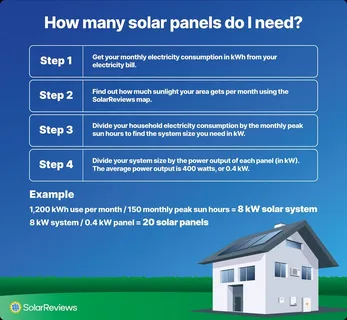
Switching to solar is one of the most practical ways to lower energy bills and move toward clean power. Yet one of the most common questions homeowners ask is: how many solar panels do I need? The answer depends on factors like your electricity usage, roof space, and local sunlight conditions. With so many variables, finding a straightforward approach matters. That’s where this solar calculator guide comes in.
In this article, we’ll walk through a simple 4-step method to estimate your needs. By the end, you’ll not only know how to size your solar system but also have a clearer picture of what to expect from your investment in solar panels.
Step 1: Review Your Energy Usage
The first step is looking at your electricity bills to find out how much power your household consumes. Your utility statement lists monthly usage in kilowatt-hours (kWh).
Why energy usage matters
- Solar systems are sized based on kWh consumption.
- The higher your monthly usage, the more solar panels you’ll likely need.
- Usage patterns vary by household—larger families, electric heating, or charging an EV can all increase demand.
Tip: Add up your last 12 months of bills to get an annual average. This gives a more reliable estimate, especially if your usage changes seasonally.
Step 2: Understand Peak Sun Hours
Next, consider how much sunlight your area receives. This is measured in peak sun hours, or the number of hours per day when solar intensity is strong enough to generate power efficiently.
How peak sun hours affect your system
- Areas like California or Arizona average 5–6 peak sun hours daily, meaning you’ll need fewer panels for the same output.
- Cloudier regions may average only 3–4 hours, requiring more panels to meet the same energy demand.
- Roof orientation and shading can also affect your home’s effective peak sun hours.
Solar experts recommend using local maps or resources like the National Renewable Energy Laboratory to find your region’s average.
Step 3: Estimate Solar Energy Production
Now that you know your usage and sunlight conditions, you can estimate system output. This is where solar energy production becomes the focus.
A single panel’s production depends on its wattage rating—most residential panels today are between 350 and 450 watts. Multiply panel wattage by the number of panels and factor in your region’s average peak sun hours to estimate total production.
Example calculation
- Household usage: 1,000 kWh per month
- Average peak sun hours: 5 per day
- 400-watt panel × 30 panels = 12 kW system
- 12 kW × 5 hours × 30 days ≈ 1,800 kWh per month
This setup comfortably covers the household’s needs with some room for efficiency losses.
Step 4: Match Panels to Your Roof and Budget
The final step is aligning system size with roof space and financial considerations.
Roof space
- Each panel is about 17–19 square feet.
- A 30-panel system would need around 500–600 square feet of clear roof space.
- Complex roofs with dormers or chimneys may reduce usable area.
Budget considerations
- Factor in solar panels cost, installation, and potential incentives.
- Many homeowners offset upfront costs through federal tax credits or state-level solar incentives.
- Financing options can spread costs over time while allowing you to start saving on energy bills.
At this stage, it helps to consult solar experts who can provide a professional site evaluation and tailor recommendations to your home.
Other Factors That Influence Your Solar Needs
Beyond the 4-step framework, there are additional variables to keep in mind:
Energy efficiency upgrades
Improving insulation, upgrading appliances, or switching to LED lighting can lower your energy demand, which means fewer panels required.
Net metering policies
If your state allows you to send excess electricity back to the grid, your system can be designed to offset nearly all your annual consumption.
Solar incentives and rebates
Federal and state programs can reduce installation costs significantly. In some cases, solar incentives lower the payback period by several years.
Trusted solar companies
Working with experienced providers ensures your system is designed correctly and meets all local permitting requirements. Trusted solar companies often handle paperwork for incentives and rebates, making the process smoother.
When to Call in Solar Experts
While a calculator can give you a solid estimate, real-world conditions can complicate things. Solar experts take into account shading, panel orientation, inverter efficiency, and even future usage increases (like adding an electric car). Their guidance ensures your system performs as expected.
For homeowners considering solar, it helps to connect with reputable providers early. Unicorn Solar is an example of a company offering tailored consultations that help you make confident decisions.
Products and Services to Explore
If you’re researching further, looking at specific solar products can help you compare options by efficiency and output. You can also review available solar services to understand installation, maintenance, and support offerings.
Conclusion: How Many Solar Panels Do You Need?
So, how many solar panels do I need? The answer depends on your usage, roof size, and local sun conditions, but with the 4-step method outlined here, you now have a clear path to finding your number.
By reviewing your electricity bills, considering peak sun hours, estimating solar energy production, and aligning everything with your budget, you can size a system that meets your household’s needs. From there, working with knowledgeable solar experts ensures your installation is customized for maximum efficiency.
As more homeowners adopt renewable energy, turning to established solar companies is the best way to make sure your investment pays off for years to come.