
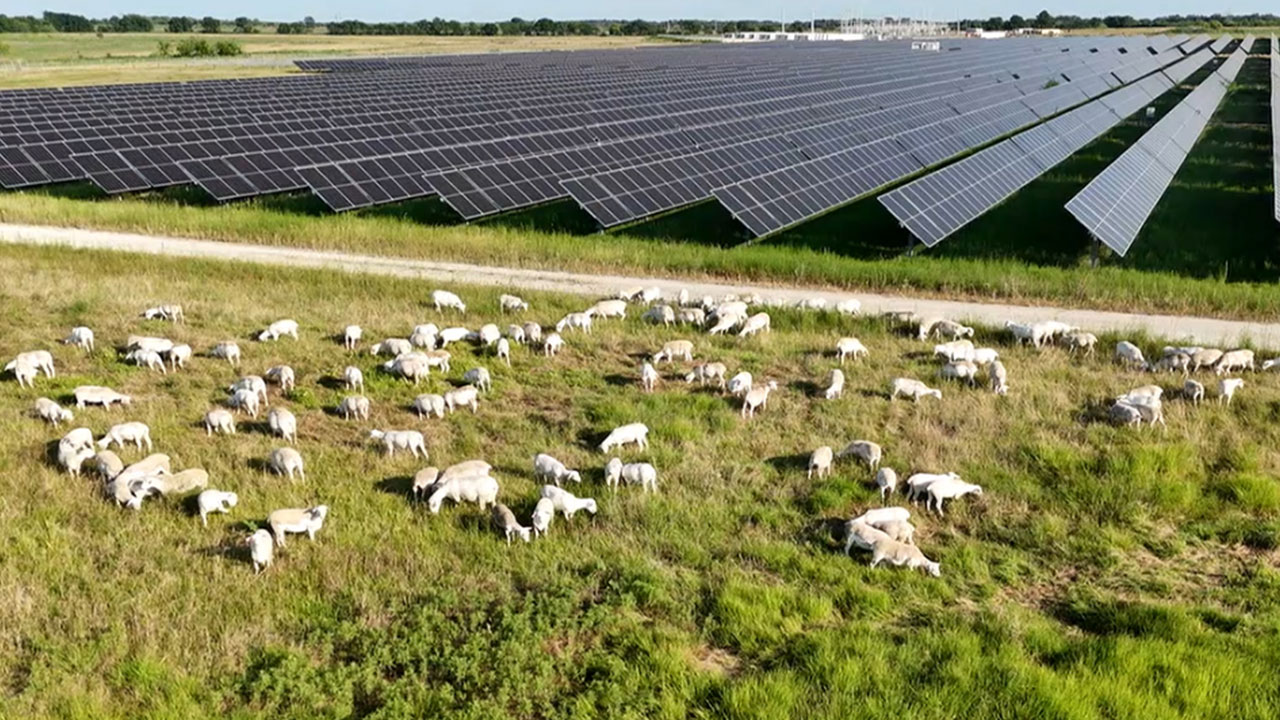
As the solar industry rapidly expands across the United States, developers are seeking ways to make utility-scale solar projects more sustainable, cost-effective, and environmentally friendly. One of the most innovative solutions to emerge is solar grazing—the use of livestock, particularly sheep, to manage vegetation around solar arrays. This practice not only keeps grass and weeds under control but also transforms solar farms into productive, dual‑use agricultural spaces.
In this guide, we’ll explore what solar grazing is, how it works, its environmental and economic benefits, and why it’s becoming a best practice in solar site maintenance.
What Is Solar Grazing?
Solar grazing is the use of grazing animals—most commonly sheep—to manage vegetation growth underneath and around solar panel arrays. Instead of using gas-powered mowers, herbicides, or labor-intensive landscaping, developers and farmers partner to bring in flocks that naturally maintain grass and weeds, helping ensure that panels remain unobstructed and efficient.
Sheep are the preferred animal for this practice because they are the right size to move easily under and around panels, they don’t jump or climb on equipment (unlike goats), and they graze evenly without causing damage.
Why Vegetation Management Matters
At utility‑scale solar farms, unchecked vegetation can:
- Shade panels reduce energy production
- Increase fire risks in dry climates.
- Interfere with electrical components and infrastructure.
- Requires frequent mowing and the use of chemical herbicides.
By replacing or supplementing traditional mowing with solar grazing, livestock provides a low-carbon, cost-effective, and regenerative alternative.
How Solar Grazing Works
- Partnerships Formed
Solar developers or operators partner with local farmers or sheep owners who supply and manage the animals. - Seasonal Grazing Plans
Flocks are rotated based on vegetation growth, grazing intensity, and site needs. Most solar grazing occurs seasonally, typically from spring to fall. - Fencing and Water Supply
Solar sites are typically fenced to protect livestock and wildlife. Water sources and shaded areas are made available if natural cover isn’t sufficient. - Monitoring and Management
Shepherds or grazing service providers monitor the animals, ensuring their safety, health, and well-being. Some farms utilize mobile monitoring tools and remote surveillance systems.
Benefits of Solar Grazing
✅ Cost Savings
- Reduces labor and fuel costs compared to mechanical mowing
- Lowers insurance and maintenance risks by reducing fire hazards and vegetation overgrowth
- Some solar operators report 25%–50% savings in O&M (Operations & Maintenance) over time
✅ Environmental Benefits
- Cuts emissions associated with lawnmowers and landscaping equipment.
- Promotes soil health through natural fertilization and reduced compaction.
- Encourages biodiversity and pollinator habitats by minimizing chemical use.
✅ Agricultural Opportunities
- Dual land use allows farmers to access new grazing land while solar sites remain productive.
- Supports rural economies by providing grazing contracts and local jobs.
- Reduces land competition between agriculture and energy, helping ease zoning and permitting challenges.
Real‑World Examples
- New York: The American Solar Grazing Association (ASGA) has helped develop over 50 solar grazing partnerships in the state. One 16 MW solar farm in Schoharie County saved over $20,000 annually in mowing costs by introducing 150 sheep.
- Virginia and North Carolina: Large-scale solar developers have incorporated sheep grazing into project designs from the outset, collaborating with agricultural extension services to balance energy production with animal welfare.
- California: In wildfire‑prone areas, solar grazing is being used as a fire prevention strategy by reducing flammable vegetation beneath panels.
Challenges and Considerations
While solar grazing has clear advantages, there are logistical and operational challenges:
- Site Design Compatibility: Panels must be installed at a suitable height to allow animal movement underneath—typically 18–24 inches minimum for sheep.
- Animal Welfare: Farmers must ensure animals have access to water, shade, and veterinary care. In extreme weather conditions, additional protection may be necessary.
- Operational Agreements: Clear contracts are required to define responsibilities, insurance coverage, grazing schedules, and access rights between farmers and solar operators.
The Future of Solar Grazing
Solar grazing is no longer a fringe idea—it’s becoming standard practice in sustainable solar farm design and management. With growing support from agricultural groups, solar developers, and environmental organizations, more states are providing guidance and incentives for dual‑use renewable energy projects.
In the near future, we can expect:
- National grazing networks and co‑ops
- Solar‑agrivoltaic research grants and funding
- Integration with pollinator habitats and regenerative farming models
Conclusion
Solar grazing represents a win‑win solution for both the energy and agriculture sectors. It reduces maintenance costs, supports rural economies, protects the environment, and creates a truly sustainable model for solar development. As demand for clean energy rises, combining solar panels with grazing livestock offers a scalable, practical, and eco‑friendly path forward.
Interested in making your solar project more sustainable with integrated land-use solutions, such as solar grazing? Contact Unicorn Solar today to learn how we can help design and manage your next dual-use solar farm.