
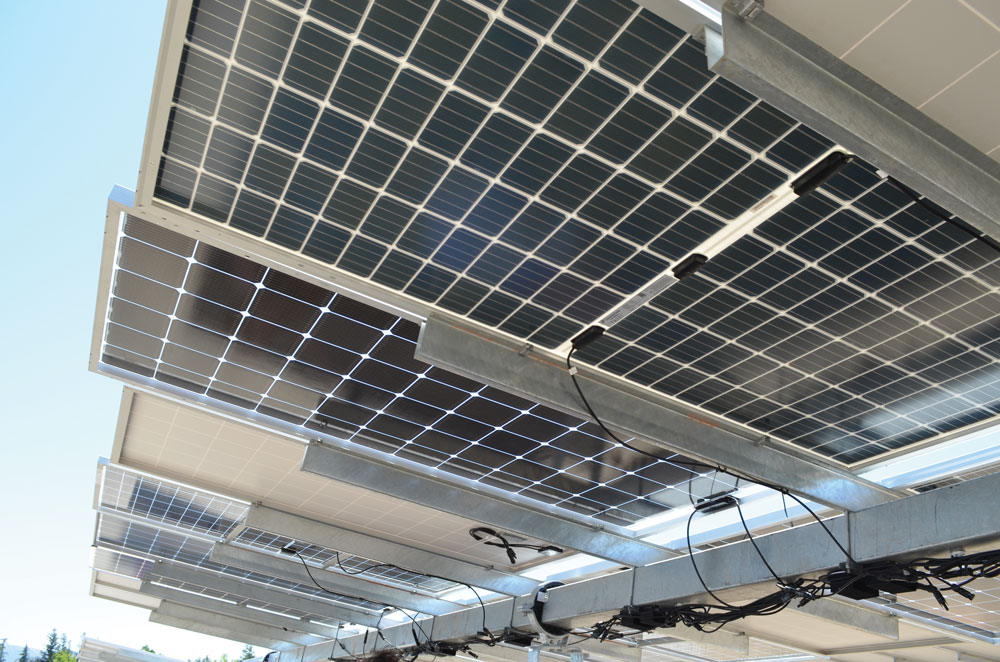
As the demand for efficient and sustainable solar energy systems grows, the solar industry continues to innovate. One of the most impactful advancements in recent years is the development of bifacial solar panels. Unlike traditional panels that absorb sunlight from only one side, bifacial panels generate electricity from both the front and back, capturing reflected sunlight to increase overall energy output.
In this blog, we’ll explore how bifacial solar panels work, their key benefits, where they perform best, and why they’re becoming a go-to solution for modern solar projects.
What Are Bifacial Solar Panels?
Bifacial solar panels are designed with solar cells on both sides of the panel. While the front side captures direct sunlight like a conventional panel, the back side captures reflected light (also known as albedo) from the ground, rooftops, or nearby surfaces. These panels typically use glass-on-glass or glass-on-transparent backsheet construction, allowing sunlight to pass through or reflect onto the rear cells.
This two-sided generation allows for increased energy output without a proportional increase in panel area, making bifacial solar a more efficient use of space and sunlight.
How Do Bifacial Panels Work?
The basic principle behind bifacial panels is the capture and conversion of light on both faces. Here’s how it works:
- Direct Irradiance (Front Side)
Like traditional panels, bifacial modules absorb direct sunlight hitting the front surface. - Reflected Irradiance (Back Side)
Sunlight that bounces off the ground or other surfaces is captured by the rear side, generating extra electricity. - Combined Output
The total energy production is the sum of both front and rear generation, typically up to 10–20% more than standard panels, depending on site conditions.
Key Benefits of Bifacial Solar Panels
1. Higher Energy Output
Under the right conditions, bifacial panels can produce 5% to 30% more energy than monofacial panels, depending on factors like ground reflectivity and installation height.
2. Lower Cost Per kWh
Although bifacial panels may have a higher upfront cost (5–10% more), their higher energy yield can result in a lower levelized cost of electricity (LCOE) over time.
3. Durability and Longer Lifespan
Many bifacial panels utilize double-glass construction, which enhances both mechanical strength and weather resistance. This makes them more durable than traditional backsheet modules, with life spans reaching 30 years or more.
4. Flexible Installation Options
Bifacial panels work well in a variety of settings—rooftops, ground-mounted systems, canopies, carports, and trackers—offering both form and function.
Best Use Cases for Bifacial Panels
While bifacial technology can be used in many environments, it performs best under specific conditions:
- High-Albedo Surfaces: Light-colored or reflective ground materials (such as white gravel, sand, snow, or concrete) bounce more sunlight onto the rear side.
- Elevated Ground-Mount Systems: Raising the panels off the ground (e.g., 1 meter or more) allows more light to reach the back of the panels.
- Solar Trackers: Single or dual-axis trackers tilt the panels during the day, maximizing exposure to direct and reflected light.
- Flat Roofs or Solar Carports: Reflective membranes or light-colored surfaces enhance rear-side generation in commercial applications.
Considerations Before Installation
Before choosing bifacial panels, it’s essential to assess the following:
- Site Conditions: Shading, low albedo, or installations very close to the ground reduce rear-side gains.
- System Design: Spacing, tilt angle, and elevation must be optimized to maximize the full potential of bifacial performance.
- Monitoring Equipment: Specialized inverters or software may be necessary to track total output accurately.
- Cost Comparison: While bifacial panels can increase ROI, initial investment and complexity may be slightly higher.
Case Study Example
A 1 MW solar farm in Texas was upgraded to bifacial modules mounted on single-axis trackers over crushed stone (high albedo). The site saw a 12% increase in annual energy production compared to monofacial modules. This resulted in a nearly 1.5-year faster payback period, making the extra investment highly worthwhile.
The Future of Bifacial Technology
Bifacial solar panels are transitioning from a niche to a mainstream technology, particularly in utility-scale and commercial projects. With ongoing improvements in materials, tracking systems, and reflective surface designs, bifacial performance is expected to continue improving.
What to expect:
- Wider adoption in residential and commercial sectors
- Integration with AI-powered tracking systems
- Standardization in large solar farms due to improved LCOE
- Growing compatibility with solar storage and V2G systems
Conclusion
Bifacial solar panels represent a significant leap in solar efficiency and system optimization. By capturing light from both sides, they provide higher energy yields, better long-term value, and greater design flexibility. Whether you’re installing a commercial array, a solar carport, or a large-scale ground mount system, bifacial modules offer an innovative, forward-thinking solution.
Looking to make the most of your solar investment? Contact Unicorn Solar today to explore bifacial panel solutions tailored to your energy goals.