
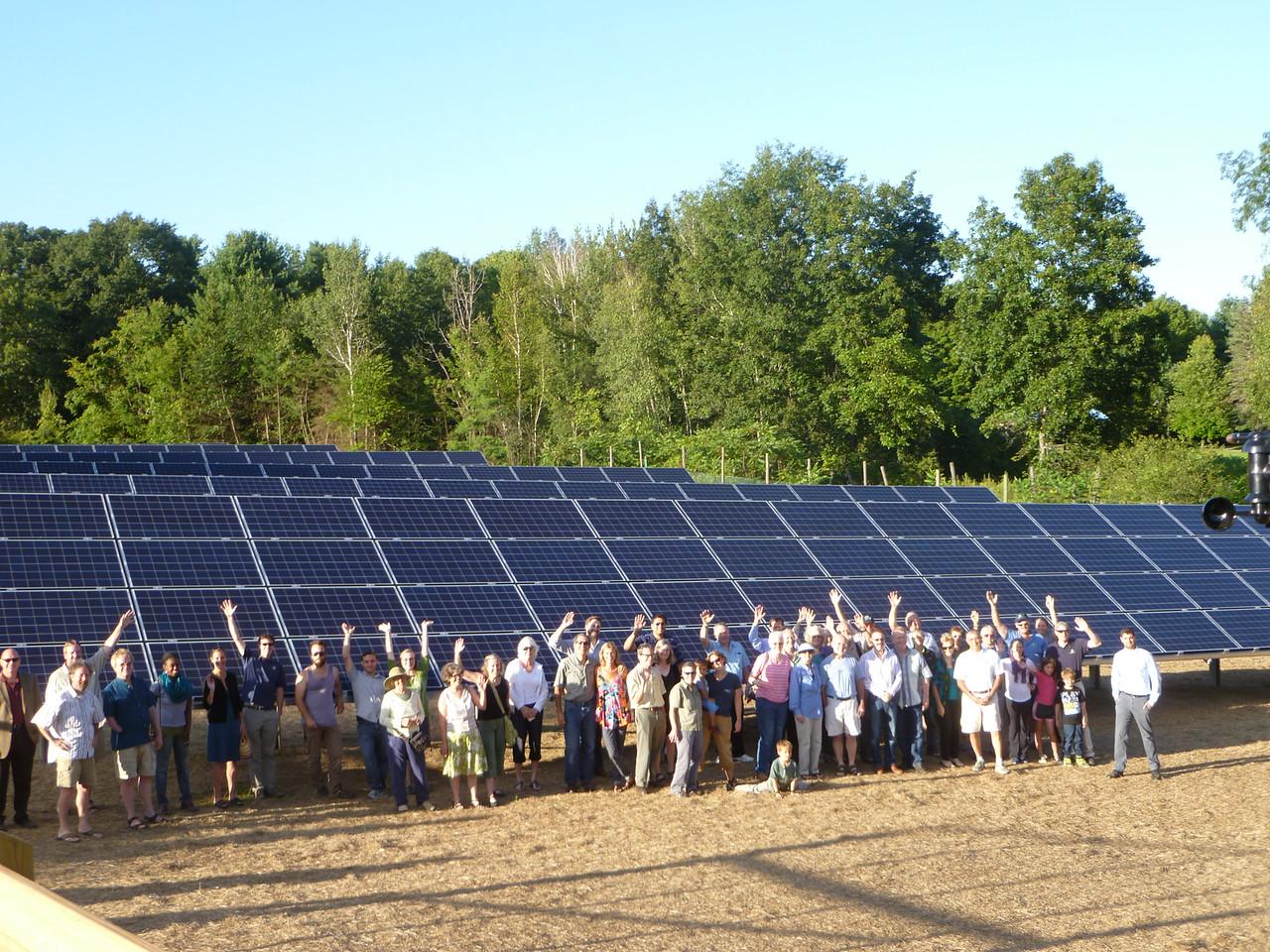
Solar energy has long been associated with private rooftops and individual homeowners. But what if you don’t own your home, live in a shaded apartment, or can’t afford a complete solar installation? That’s where community solar comes in. This growing model enables households, renters, and small businesses to access the benefits of solar energy without the need to install panels on their property.
Community solar is not only reshaping the clean energy landscape—it’s democratizing it. In this article, we’ll explore what community solar is, how it works, who it benefits, and how it’s helping expand solar equity across the United States.
What Is Community Solar?
Community solar (also known as shared solar or solar gardens) is a collective solar energy model where multiple participants subscribe to a single solar array located off-site, typically on open land, a large rooftop, or an underutilized brownfield. The electricity generated is fed into the grid, and subscribers receive credit on their utility bill for their share of the power produced.
Instead of paying for panels and installation, subscribers pay a monthly fee (or, in some cases, no upfront cost) to access clean energy at rates lower than standard utility prices.
How Does It Work?
The process generally looks like this:
- Solar Developer Builds the Array
A private company, nonprofit, or utility develops a centralized solar array in your state or utility territory. - Subscribers Enroll
Households or businesses can sign up to purchase or lease a portion of the solar power generated, usually based on their average monthly electricity usage. - Energy Credits Are Applied
The power generated by your portion of the array is credited to your utility bill in the form of “virtual net metering.” This offsets your monthly electricity costs. - You Save Money
Most community solar programs offer a 5% to 15% discount on your electricity rate, with no equipment, installation, or maintenance required.
Who Is It For?
Community solar is designed for people who are traditionally excluded from rooftop solar, including:
- Renters and Apartment Dwellers
Since they don’t own their roofs, traditional rooftop solar isn’t an option. - Low- to Moderate-Income Households
Upfront costs or credit restrictions often prevent these homeowners from financing private systems. - Homeowners with Shaded Roofs or HOA Restrictions
Those with structural, directional, or neighborhood barriers can still benefit from solar. - Small Businesses and Nonprofits
Organizations looking to cut energy costs without investing in infrastructure can easily participate.
Benefits of Community Solar
- No Installation or Maintenance
The project developer handles everything. You don’t need to change your home or worry about upkeep. - Lower Energy Bills
Depending on the program and state, participants often save between 5% and 15% on their annual electricity bills. - Flexible Subscription Models
Some programs allow you to cancel with little to no penalty, making it more adaptable than owning a rooftop system. - Scalable Access
Participants can subscribe to cover just a portion or all of their monthly electricity usage. - Environmental Impact
Even without installing panels, you can reduce your carbon footprint and support the growth of renewable energy in your area.
Community Solar vs. Rooftop Solar
| Feature | Community Solar | Rooftop Solar |
| Ownership | Shared/subscription | Private/individual |
| Upfront Cost | None or minimal | High (unless financed) |
| Maintenance | None | Owner’s responsibility |
| Accessibility | Renters + all residents | Homeowners only |
| Bill Savings | 5%–15% | 40%–100% depending on ROI |
Where Is Community Solar Available?
As of 2025, over 22 U.S. states have active community solar programs. Leading states include:
- New York – Over 1 GW of capacity with strong support for low-income customers.
- Minnesota – Nation-leading per capita community solar capacity.
- Colorado – Long-established programs with strong utility participation.
- Illinois – Rapidly growing under the Climate and Equitable Jobs Act (CEJA).
- Maryland and New Jersey – Offering subscription programs with guaranteed savings.
Many other states, such as California and Texas, are rapidly expanding community solar through utility programs and third-party developers.
Future Growth and Opportunities
The U.S. Department of Energy has set a goal of 5 million community solar households by 2025, which would generate $1 billion in energy bill savings.
Innovations and policy incentives are making the model even more attractive:
- Low-Income Carveouts
Many states require a percentage of subscriptions to be reserved for low-income households, ensuring equity in the transition to clean energy. - Blockchain for Billing
Some projects are exploring the use of smart contracts and blockchain to simplify subscription management and enhance billing transparency. - Agrivoltaics and Dual Land Use
Some community solar arrays are now being built with pollinator habitats or on farmland (agrivoltaics), increasing land productivity and local support.
Conclusion
Community solar is a powerful tool for expanding access to clean energy. By lowering barriers such as cost, ownership, and location, it empowers renters, businesses, and families across the U.S. to benefit from solar energy without ever having to climb a roof. As more states adopt supportive policies and utilities embrace shared models, community solar is becoming a critical component of the renewable energy future.
Want to explore how community solar fits into your energy strategy? Contact Unicorn Solar to learn more about your local options.