
Selecting the wrong gas turbine for an industrial project does not just mean a performance shortfall. It can mean years of operating costs, maintenance cycles, and fuel consumption that were never part of the original budget. A turbine that is incorrectly sized, mismatched to the fuel supply, or sourced without proper documentation can cost a project operator millions over the life of the asset.
Gas turbine equipment is one of the most capital-intensive purchases in industrial energy infrastructure, and the decisions around it are more nuanced than most buyers expect the first time. This guide covers what gas turbine systems actually consist of, how the main types differ, where each application fits, and what separates a well-sourced turbine purchase from a costly one.
What Gas Turbine Equipment Actually Is
A gas turbine is a type of internal combustion engine that converts the energy from burning fuel into mechanical rotation, which then drives a generator, compressor, or other mechanical load. Unlike a reciprocating engine, a gas turbine operates through continuous combustion rather than discrete cycles, giving it a high power-to-weight ratio well suited to large-scale power generation and industrial processes.
These systems range from small units producing a few megawatts for distributed generation to massive industrial gas turbines producing several hundred megawatts for utility-scale grid power. The core operating principle is consistent across sizes, while design, materials, and configuration vary significantly by application.
The Core Gas Turbine Components
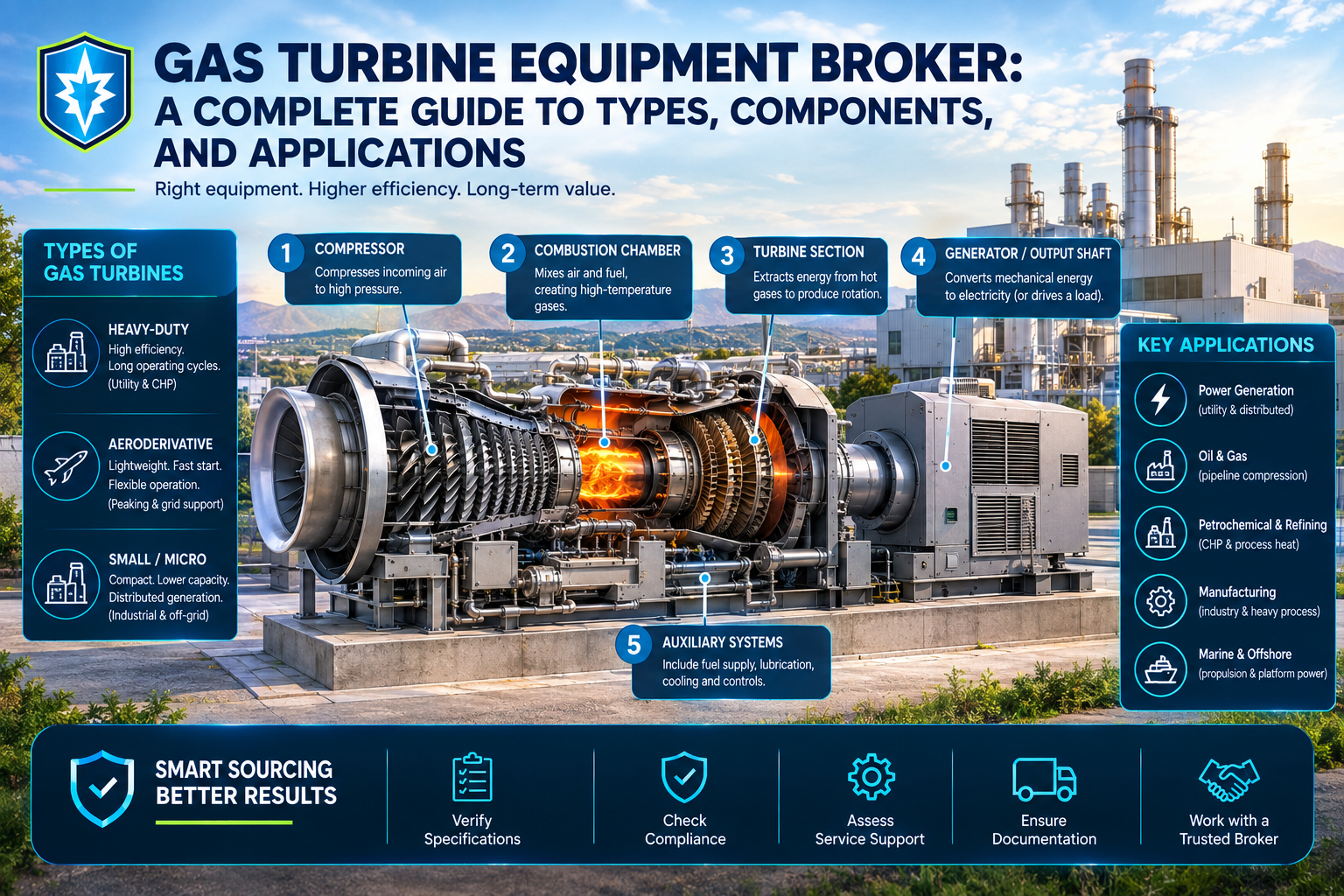
Every gas turbine, regardless of size or manufacturer, contains the same fundamental gas turbine components. Understanding each one is essential for evaluating equipment quality and long-term maintenance requirements.
The compressor draws in ambient air and compresses it to high pressure before it enters the combustion zone. Compressor efficiency directly affects the turbine’s overall thermal efficiency and fuel consumption. Compressor fouling, where deposits accumulate on blades over time, is one of the most common causes of gradual performance degradation.
The combustion chamber mixes compressed air with fuel and ignites it, producing high-temperature, high-pressure gases. Modern combustors are designed to minimize emissions while maintaining stable combustion across a range of operating conditions. Combustor design significantly affects NOx output and is a key variable in meeting environmental compliance requirements.
The turbine section extracts energy from the hot combustion gases and converts it into shaft rotation. Turbine blades operate under extreme heat and mechanical stress, making material quality and blade coating technology major factors in both performance and maintenance intervals.
The generator or output shaft converts mechanical rotation into electrical power in generation applications, or drives a mechanical load directly in industrial applications such as pipeline compression.
Auxiliary systems cover fuel supply, lubrication, cooling, and controls. These are the components that most often create operational problems in the field and are frequently where cost-cutting shows up in lower-quality industrial gas turbine equipment.
Main Types of Gas Turbine Systems
Heavy-duty industrial gas turbines are large, ground-mounted units designed for long operating cycles with high availability. They are the backbone of utility-scale gas turbine power generation equipment and combined heat and power plants, optimized for fuel efficiency over a long service life rather than rapid start capability.
Aeroderivative gas turbines are adapted from aircraft jet engine technology for ground-based use. They are significantly lighter and more compact than heavy-duty machines and can reach full load in minutes rather than hours, making them well suited for peaking power applications and fast grid response.
Smaller industrial gas turbines, sometimes called microturbines for units under one megawatt, serve distributed generation, combined heat and power, and remote or off-grid industrial applications. They trade some efficiency for flexibility and lower installation complexity.
Where Gas Turbine Power Generation Equipment Is Applied
Gas turbine power generation equipment is the largest application by volume, spanning both utility-scale and distributed configurations. Industrial gas turbine equipment also drives compressors in oil and gas pipelines and processing facilities, using mechanical output directly rather than converting it to electricity.
Petrochemical plants, refineries, and large manufacturing facilities use gas turbines for combined heat and power applications, capturing exhaust heat for process use alongside electricity generation. Marine propulsion and offshore platform power are additional areas where the aeroderivative design’s power-to-weight advantage is particularly valuable.
Common Mistakes When Sourcing Gas Turbine Equipment
Sizing based on peak demand alone without accounting for part-load efficiency is one of the most expensive mistakes in gas turbine procurement. A turbine running below rated output for most operating hours often performs far less efficiently than a properly sized smaller unit.
Overlooking emissions compliance for the specific site creates regulatory risk that is much harder to manage after commissioning. Combustor technology and fuel system configuration both affect emissions output and should be confirmed against local requirements before equipment is specified.
Focusing only on capital cost without evaluating fuel consumption, maintenance intervals, and parts availability over a 20 to 30 year asset life produces misleading comparisons. The cheapest turbine on paper is rarely the cheapest by year ten.
Ignoring service network depth is a significant risk. A turbine from a manufacturer with limited regional service capability carries hidden costs that never appear in the initial quote.
FAQs About Gas Turbine Equipment
What are the main gas turbine components in any turbine system?
Every gas turbine contains a compressor, combustion chamber, turbine section, and auxiliary systems covering fuel, lubrication, cooling, and controls. The quality of each component affects efficiency, emissions, and maintenance requirements.
What is the difference between heavy-duty and aeroderivative gas turbine systems?
Heavy-duty turbines are optimized for long operating cycles and high efficiency at steady load. Aeroderivative units are lighter, faster starting, and better suited to applications requiring flexible dispatch or rapid load changes.
What industries use industrial gas turbine equipment most?
Power generation, oil and gas pipeline compression, petrochemical processing, and large-scale manufacturing are the primary users. Offshore platforms and marine propulsion also rely heavily on aeroderivative designs.
How long does gas turbine power generation equipment typically last?
Well-maintained industrial gas turbines commonly operate for 25 to 30 years. Major overhaul intervals typically occur every 25,000 to 50,000 operating hours depending on design and fuel type.
What should be verified before purchasing gas turbine equipment?
Confirm sizing against actual operating load profiles, verify emissions compliance for your jurisdiction, evaluate total cost of ownership including fuel and maintenance, and confirm the manufacturer’s regional service and parts availability. Working with a verified equipment sourcing partner like Unicorn Solar ensures every piece of equipment comes with full documentation and manufacturer traceability, which is especially critical for high-value industrial assets.
The Bottom Line
Gas turbine equipment broker decisions carry consequences that stretch across decades of operating cost, maintenance cycles, and regulatory compliance. Getting the type, size, and configuration right from the beginning, and sourcing from a supplier who can document equipment provenance and service support, determines whether an industrial gas turbine investment delivers its projected return or becomes a long-term liability.
Need Help Sourcing the Right Energy Equipment?
Unicorn Solar specializes in verified equipment sourcing for energy projects, ensuring every piece of equipment comes with full documentation, manufacturer traceability, and confirmed warranty coverage. Reach out at unicorn-sd.com/contact-us for a free consultation on your next project’s equipment needs.
