
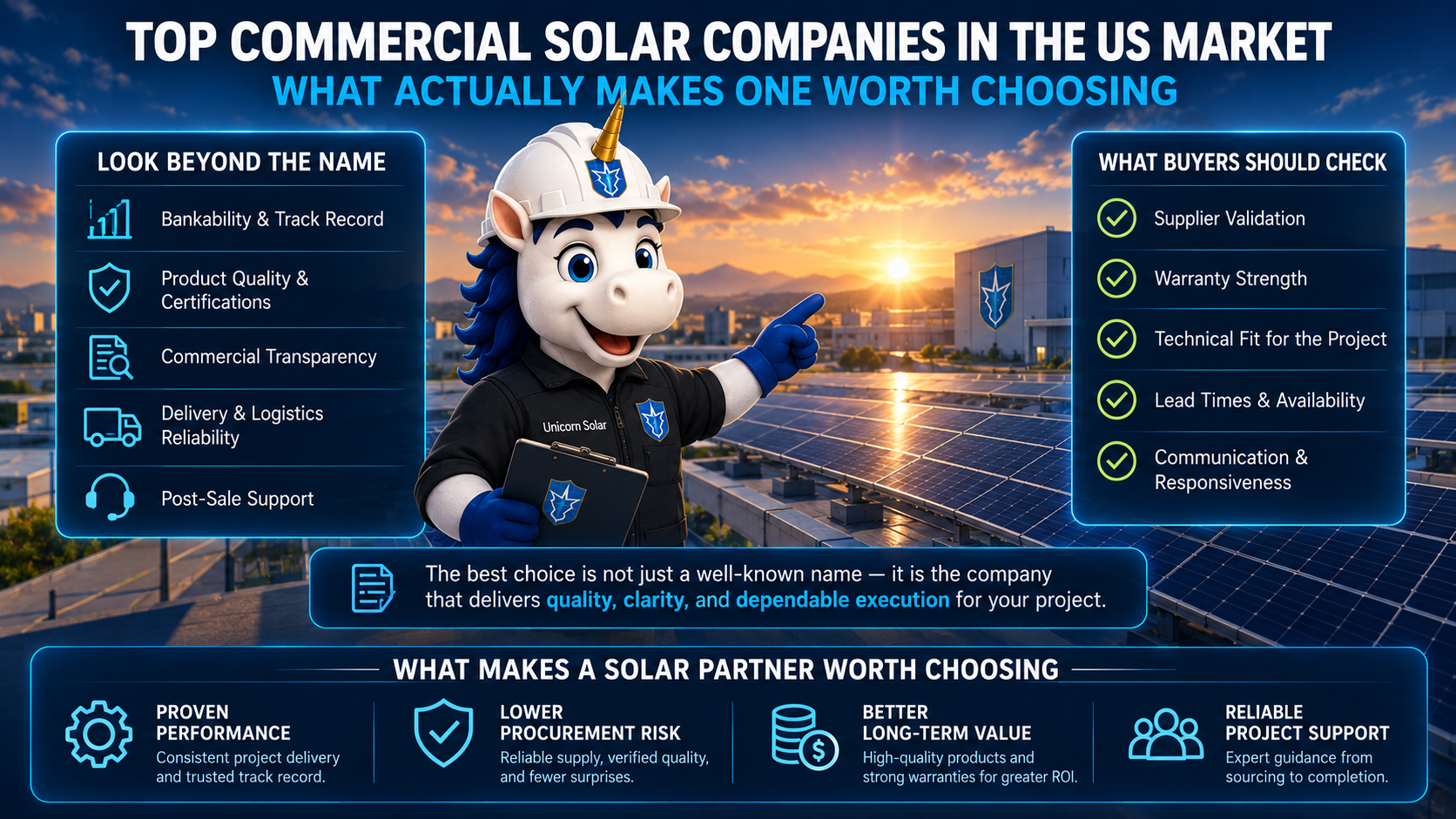
Walk into any neighborhood with newer homes and you will likely find multiple yard signs advertising different solar companies. The US commercial solar market is crowded and full of companies making nearly identical promises: lower bills, clean energy, easy financing, twenty-five year warranty.
Most of those promises are impossible to verify until after you have already signed a contract. This guide is not a ranked list of brand names. It is a breakdown of what actually separates top commercial solar companies from the ones that look good in ads but cut corners where it counts.
What Defines a Top Commercial Solar Company?
A top commercial solar company designs systems accurately, sources quality equipment, installs it correctly, and supports the customer long after the panels go on the roof. That combination is less common than the marketing suggests.
The US commercial solar market has grown significantly over the past decade, with installations reaching record levels year over year. More competition has driven prices down, which benefits consumers. It has also made it easier for underprepared companies to enter the market, promise competitive rates, and fail to deliver consistent quality once the contract is signed.
Why Choosing the Wrong Commercial Solar Company Costs More Than You Think
A commercial solar system typically costs between $15,000 and $35,000 before federal tax credits. Most homeowners expect that investment to pay itself back through electricity savings over 7 to 10 years. That math only works if the system performs close to what was projected.
A system that underperforms by 20% extends your payback period by two years or more. Poor installation that causes roof damage can run $5,000 to $15,000 to repair. If your installer goes out of business, you are left navigating manufacturer warranty claims on your own with no support. These are not edge cases — they happen regularly in a market where barriers to entry are low and oversight is inconsistent.
What the Top Commercial Solar Companies Do Differently
They provide accurate system design upfront. The best companies use site-specific data, including roof orientation, shading analysis, and local irradiance figures, to project realistic energy output. Companies that use generic estimates to show inflated savings numbers are setting up a disappointment they will not be around to address.
They are specific about equipment. Top companies tell you exactly which panel brand, inverter model, and racking system will be used before you sign anything. They can explain why they chose that equipment and what the manufacturer warranty covers. A company that is vague about product details is usually sourcing on price alone with less attention to quality or warranty reliability.
They employ trained, certified crews. The best commercial solar companies employ NABCEP-certified technicians or require the same from subcontractors they use. NABCEP certification is the recognized professional standard for solar installation in the United States, and it requires passing rigorous exams on system design and installation safety.
They handle permitting without shortcuts. Permitting and utility interconnection paperwork is where a lot of companies quietly cut corners. The top companies manage this process completely, communicate proactively when timelines shift, and do not push for final payment before interconnection is approved and the system is actually running.
They back their work in writing. Equipment warranties come from manufacturers. Workmanship warranties come from the installer. A top commercial solar company offers a workmanship warranty in writing, clearly explaining what it covers, how long it lasts, and what the claims process looks like if something goes wrong.
How Leading Solar Companies Approach Equipment Sourcing
Equipment sourcing is one of the clearest separators between top commercial solar companies and average ones, and it is the detail most homeowners never ask about.
The same panel brand can come with full manufacturer warranty protection through one distribution channel and effectively no recourse through another. This happens when equipment is purchased through unauthorized or gray market suppliers where the manufacturer has no record of the sale.
Leading commercial solar companies source through verified channels, which means they can provide documentation tracing equipment back to an authorized production source and confirm the warranty is fully enforceable. Companies that work with professional procurement partners like Unicorn Solar can answer these questions in writing before installation begins, which protects homeowners and protects the installer’s own reputation if a warranty issue comes up years down the line.
Common Mistakes Homeowners Make When Choosing a Solar Company
- Picking based on a door-to-door pitch. High-pressure in-home sales presentations are designed to close quickly. The best decision is rarely the one made fastest.
- Comparing only the monthly payment rather than the full contract terms. Loan terms, escalator clauses in leases, and end-of-term buyout provisions in PPAs can significantly affect the long-term value of a solar agreement.
- Not checking whether the company does its own installations or uses subcontractors. This gap creates accountability problems later — ask specifically who will be on your roof and what happens if their work causes a problem.
- Ignoring the company’s local tenure. A commercial solar company that has been operating in your area for five or more years has a track record that can be verified. A company that opened recently or moved in from another market has not earned that trust yet.
Frequently Asked Questions
How do I know if a solar company will still be in business in 10 years? No one can guarantee it, but looking at local operating history, financial backing, and whether they own their installation operations rather than relying heavily on subcontractors gives you a better read than marketing materials will.
Are national solar brands better than local companies? Not automatically. National brands offer name recognition, but local companies often provide more consistent installation quality and better post-installation service because they depend on local reputation.
What is the most important warranty to check? Both matter equally. The equipment warranty covers the hardware. The workmanship warranty covers the installation. Make sure both are clearly written in your contract before signing.
Before I sign a contract with a solar firm, what questions should I ask? Ask who performs the installation, which specific equipment will be used, how the workmanship warranty works, who handles permitting, and what the process is if something goes wrong after installation.
The Bottom Line
The top commercial solar companies in the US market earn that position by doing straightforward things consistently well. Accurate system design, verified equipment sourcing, certified installation crews, and honest post-sale support are not differentiators — they are the baseline. The companies that meet that baseline are worth your time. The ones that cannot explain how they meet it are not.
Source Equipment Your Customers Can Count On
If you are a commercial solar installer who wants to back your warranties with verified equipment documentation, Unicorn Solar can help. Reach out for a free consultation on sourcing certified equipment your customers and your business can rely on.
