
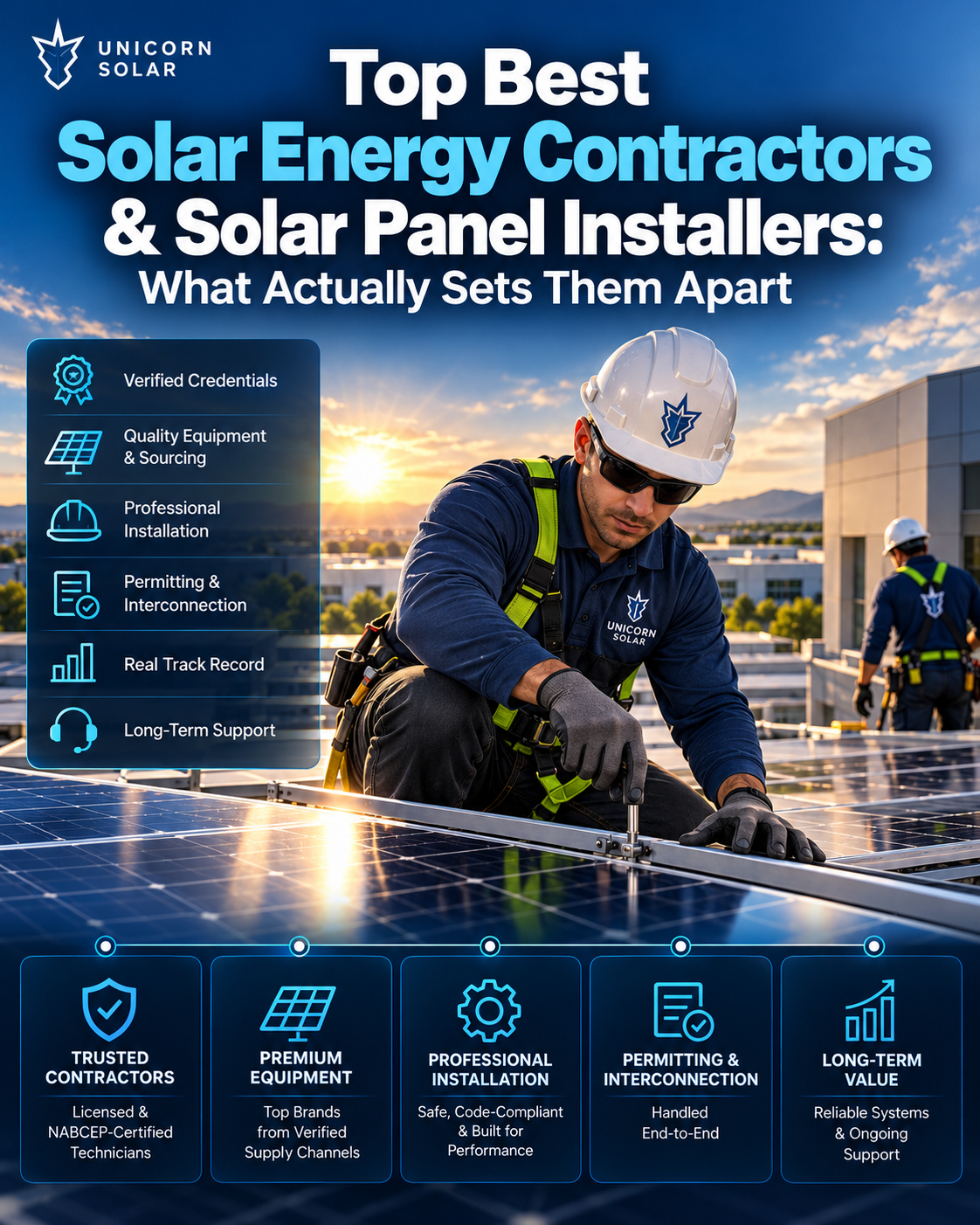
Search “solar installers near me” and you will get dozens of results within minutes. Every company on that list claims to be experienced, affordable, and customer-focused. The problem is that the claim costs nothing to make. What separates the best solar energy contractors from the rest is not a marketing page. It is a specific set of practices, credentials, and habits that show up long before installation day and long after it.
Whether you are a homeowner going solar for the first time or a commercial developer sourcing an installation partner for a larger project, the criteria that matter are the same. Here is what actually defines a top solar contractor.
What Makes Someone a Top Solar Energy Contractor?
A top solar energy contractor consistently delivers systems that perform as promised, handles every step of the process professionally, and stays accountable after the job is complete. That sounds straightforward. In practice, it means holding specific credentials, using verified equipment, employing trained crews, and maintaining a track record of completed projects you can independently confirm.
The solar industry has expanded rapidly over the past decade. That growth brought a wave of legitimate, well-run companies into the market. It also brought a wave of sales-first operations that look polished on the surface and cut corners where customers cannot easily see.
Why Picking the Wrong Contractor Costs More Than You Realize
Consider a solar system priced at $22,000. At that investment level, a system that underperforms by even 15% costs a homeowner roughly $3,300 in lost value over the first ten years alone, before accounting for higher electricity bills than projected.
For commercial projects, the numbers are larger and the stakes are higher. A 200-kilowatt commercial installation can run $300,000 or more. A contractor who misses design specifications, uses lower-grade equipment, or mishandles interconnection paperwork can delay a project by months and add tens of thousands in unforeseen costs. The cheapest quote at the beginning of a project is rarely the cheapest outcome by the end of it.
What the Best Solar Panel Installers Actually Do Differently
They carry verifiable credentials. Top contractors hold valid state contractor licenses and employ NABCEP-certified technicians. NABCEP, the North American Board of Certified Energy Practitioners, is the gold standard for professional solar installation credentials in the U.S. The best installers can name which specific team members carry those certifications, not just reference the company in general.
They are transparent about equipment. A top contractor tells you exactly which panels, inverters, and racking components will be used, names the manufacturers, and explains how each product is warranted. They source equipment through verified supply channels and can document it. If a contractor cannot answer basic questions about where their equipment comes from, that gap in transparency usually points to a gap in accountability.
They handle permitting and interconnection themselves. Some contractors hand off permitting to a third-party service or leave it to the homeowner to follow up with the utility. The best ones manage the entire process in-house and take responsibility for it. Interconnection delays caused by incomplete paperwork are one of the most common and most avoidable project setbacks.
They provide written workmanship warranties. Equipment manufacturers warrant the hardware. The contractor is responsible for warranting their own labor and installation quality. Top contractors put this in writing before the project starts, clearly stating what is covered, for how long, and what the process looks like if something goes wrong.
They have a real local track record. National brand recognition is not the same as local experience. The best solar contractors in any market have been operating there long enough to build a body of completed work, real references, and a reputation that can be verified by calling actual past customers.
How Top Contractors Handle Equipment Sourcing
The best solar energy contractors treat equipment sourcing as a core part of their service quality, not an afterthought. They do not simply order from the cheapest available source. They work with procurement partners who can verify manufacturer relationships, confirm warranty validity, and provide quality documentation for every component.
This matters more than most customers realize. The same panel brand can carry full manufacturer warranty support through one supply chain and no enforceable coverage through another. Contractors who partner with professional sourcing companies like Unicorn Solar can answer detailed questions about equipment origin, batch quality, and warranty terms in writing, which protects both the contractor’s reputation and the customer’s investment.
Common Mistakes People Make When Hiring Solar Contractors
Prioritizing the lowest quote without comparing what is included is the most expensive mistake in solar. A lower bid often reflects thinner equipment margins, shorter warranty commitments, or less experienced crews. The gap between the cheapest and second-cheapest quote deserves more scrutiny than any other comparison.
Assuming all warranties are equal is another costly oversight. A 25-year panel warranty only helps if the manufacturer is still operating and the product was sourced through an authorized channel. A workmanship warranty is only useful if the contractor is still in business to honor it.
Skipping the reference check because reviews look good online shortchanges your decision. Online reviews are easy to curate. Speaking directly with a past customer whose system has been running for two or three years tells you what no review page can.
Overlooking subcontracting arrangements is a gap that comes back to bite people. Ask directly whether your project will be handled by the company’s own crew or handed to a subcontractor, and clarify who is accountable in either case.
FAQs About Solar Energy Contractors and Installers
What credentials should the best solar installers have?
A valid state contractor’s license and NABCEP certification for their installation technicians are the two most important credentials to verify before hiring.
How do I find the top solar contractors in my area?
Cross-reference state licensing board records, check NABCEP’s online directory, and ask contractors for references from completed projects in your specific area.
Is a larger solar company always better than a local one?
Not necessarily. Larger companies sometimes operate as sales organizations using subcontracted crews. A well-established local contractor with a verifiable track record often delivers more consistent quality.
What should I ask a solar contractor before signing?
Ask about their license number, which team members hold NABCEP credentials, which equipment brands they use, where that equipment comes from, what their workmanship warranty covers, and whether they handle permitting directly.
What happens if my solar contractor goes out of business?
Equipment warranties remain valid through the manufacturer directly. Workmanship warranties typically become unenforceable, which is why the contractor’s stability and longevity matter when making your selection.
The Bottom Line
The best solar energy contractors and panel installers share a consistent set of traits: verifiable credentials, transparent equipment sourcing, thorough documentation, and a track record you can confirm independently. Every contractor on the market claims to meet that standard. The ones who actually do can prove it before you sign, not just promise it after you have already paid.
Work With Installers Who Get the Equipment Right
If you are a solar contractor or EPC who wants to give every customer verified equipment documentation and confident warranty answers, Unicorn Solar can help. Reach out at unicorn-sd.com/contact-us for a free consultation on building a sourcing process your customers can trust.
