
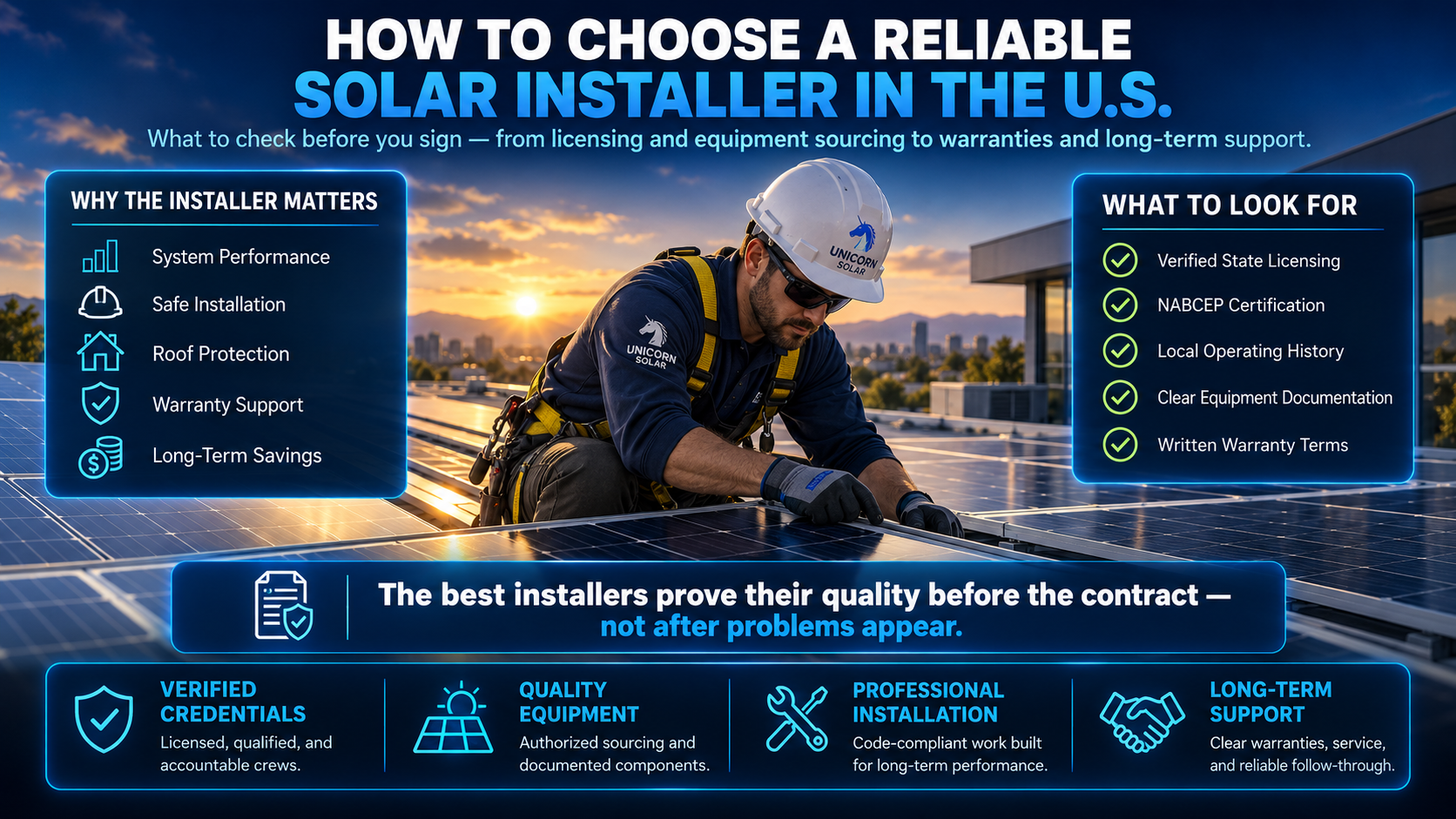
Most homeowners spend more time researching a new appliance than they spend vetting the company about to put a $20,000 system on their roof. By the time the problems show up, the sales rep is long gone, and you are left dealing with a warranty claim from a company that may not even exist anymore. Choosing a reliable solar installer is one of the most important decisions you will make for your home, and most people get it wrong for the same reasons.
What Does a Solar Installer Actually Do?
A solar installer handles everything from system design and permitting to physical installation and utility interconnection. They are responsible for making sure your system is correctly sized, properly installed, and approved to connect to the grid. A good installer does all of this cleanly and stays accountable after the job is done. A bad one disappears the moment the final payment clears.
The solar industry has grown fast, and not every company that entered it brought the same level of expertise. Some are well-established operations with years of local experience. Others are door-to-door sales organizations that subcontract the actual installation to whoever is available. Knowing the difference before you sign protects you for the next 25 years.
Why Choosing the Wrong Installer Costs More Than You Think
The upfront cost of a solar installation typically runs between $15,000 and $30,000 for a commercial system before incentives. That is a significant investment, but the real exposure is in what happens afterward.
A poorly installed system can underperform by 15% to 20% compared to projections, meaning you are still paying your electricity bill instead of eliminating it. Faulty wiring or improper mounting can create roof damage that costs thousands to repair. If the installer goes out of business, workmanship warranties become worthless, and manufacturer equipment warranties require you to navigate claims yourself. Add up underperformance losses over a 25-year system life and a bad installer decision can cost you more than the installation itself.
What to Look For in a Reliable Solar Installer
Verified state licensing is the first thing to confirm. Every state requires solar installers to hold a valid contractor’s license, but the specific category varies. Look up the license number directly on your state’s licensing board website, not just on the company’s brochure.
NABCEP certification is the clearest professional credential in the solar industry. The North American Board of Certified Energy Practitioners sets the standard for installer knowledge and competency. Ask specifically whether the technicians doing your job hold NABCEP certification, not just the company in general.
Local operating history matters more than national brand recognition. A company that has been operating in your area for five or more years has a track record you can actually verify. Ask for references from customers with systems installed at least two to three years ago and follow up with them.
Clear equipment documentation separates professional installers from risky ones. Your installer should be able to tell you exactly what panels, inverters, and racking they plan to use, which manufacturer warranties cover each component, and whether the equipment comes through an authorized supply chain. Vague answers here are a warning sign, since equipment sourced through unofficial channels may carry voided or unenforceable warranties.
Written warranty terms covering both the equipment and the workmanship should be in the contract before you sign. Manufacturer equipment warranties typically run 25 years for panels. Installer workmanship warranties vary from 5 to 25 years depending on the company. If the warranty terms are only communicated verbally, that is a problem.
How the Right Installer Handles Equipment Sourcing
One detail most homeowners never ask about is where the equipment actually comes from. Equipment quality and warranty validity depend heavily on the supply chain behind them, not just the brand name on the panel.
Reliable installers work with verified equipment suppliers who can document manufacturer relationships, confirm warranty coverage, and provide traceability back to authorized production sources. This matters because the same panel brand can come with full warranty protection through one channel and no enforceable coverage through another. Installers who partner with professional procurement partners like Unicorn Solar can answer these questions specifically and in writing rather than offering vague reassurances.
Common Mistakes Homeowners Make When Choosing a Solar Installer
Choosing based on price alone is the most common mistake. A quote that is significantly lower than others almost always reflects a trade-off somewhere, whether in equipment grade, workmanship warranty length, or the use of subcontracted crews with less accountability.
Skipping the reference check is a close second. Online reviews can be managed and curated. A direct conversation with a real customer who has had their system running for two to three years tells you far more than a five-star rating.
Ignoring subcontracting arrangements is another oversight that costs people. Some large solar companies operate primarily as sales organizations and hand the actual installation to third-party crews. Ask directly whether your installation will be performed by company employees or subcontractors, and what accountability exists either way.
Signing without reading the contract is where most disputes start. Read every line, particularly the sections on warranty terms, cancellation rights, final payment triggers, and what happens if the installation timeline extends past the agreed date.
FAQs About Choosing a Solar Installer
How do I verify a solar installer’s license?
Go directly to your state’s contractor licensing board website and search by the license number or company name. Do not rely on the number printed on the installer’s own materials.
Is NABCEP certification required?
It is not legally required in most states, but it is the most reliable indicator of professional competence. Prioritize installers whose technicians hold active NABCEP credentials.
How many quotes should I get?
At least three. This gives you a realistic baseline for pricing and lets you compare equipment quality, warranty terms, and what is actually included in each proposal.
What happens to my warranty if the installer closes?
Manufacturer equipment warranties typically remain valid through the manufacturer directly. Installer workmanship warranties generally become void, which is why the installer’s business stability matters.
Should I be concerned about subcontracted installation crews?
It depends on the oversight. Ask who is specifically responsible if subcontracted work causes a problem, and get that answer in writing.
What should a solar contract include?
System specifications, equipment brands and model numbers, installation timeline, total cost, payment schedule, warranty terms for both equipment and workmanship, and permitting responsibilities.
Can I negotiate the price or warranty terms?
Yes. Pricing is often negotiable, particularly if you have competing quotes. Warranty terms are sometimes negotiable too, especially on workmanship coverage length.
What is the most overlooked part of choosing a solar installer?
Equipment sourcing. Most homeowners never ask where the panels and inverters actually come from or whether the warranty coverage is valid through the specific supply chain being used.
The Bottom Line
Choosing a reliable solar installer in the U.S. comes down to verifiable credentials, documented equipment sourcing, clear warranty terms, and a local track record you can actually confirm. The sales process moves fast and the industry is full of companies that are better at closing deals than delivering results. Slowing down to check the details before signing is the single most effective thing you can do to protect a 25-year investment.
Get the Equipment Side Right Too
If you are an installer or EPC who wants to give customers clear, documented answers about equipment sourcing, warranty validity, and manufacturer relationships, working with a verified procurement partner makes that conversation straightforward. Reach out to Unicorn Solar at contact-us for a free consultation on sourcing verified equipment for your next project.
